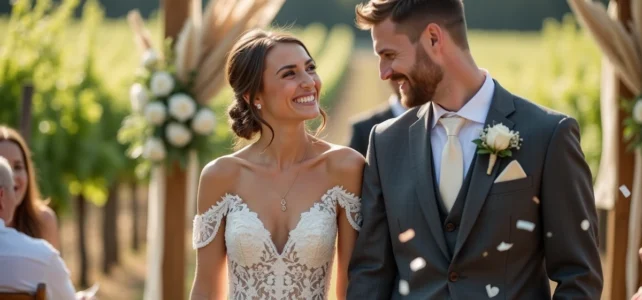
A memorable wedding relies on the coherence between the venue, the rhythm of the day, and the staging. Organizing a unique wedding requires treating each highlight as a narrative sequence, not as a checkbox on a timeline.
Wedding Staging and Guest Journey: Structuring an Immersive Experience
The major trend since 2025 is to design the wedding as an immersive experience rather than a series of services. Specifically, this means that the lighting design, music, and transitions between the ceremony, cocktail, and dinner are conceived as a continuous sensory journey.
We recommend working with a scenographer or wedding designer who thinks in sequences. Each moment (welcome, ceremony, reception, meal, evening) has its own lighting ambiance, sound palette, and emotional intensity. The transition from one moment to another is not made through a microphone announcement, but through a perceptible change in atmosphere.
The guest journey deserves a dedicated floor plan. Where do they arrive? What do they see first? What path do they take between the cocktail and the reception hall? These often-overlooked micro-transitions shape the overall perception of the day. A poorly lit corridor between two spaces breaks the immersion built over months.
The resources available on mariageetvous.fr help identify providers who work with this sequential approach rather than isolated batches (caterer on one side, DJ on the other, florist elsewhere).
Organic Minimalism and Wedding Decoration 2026: Less Quantity, More Material
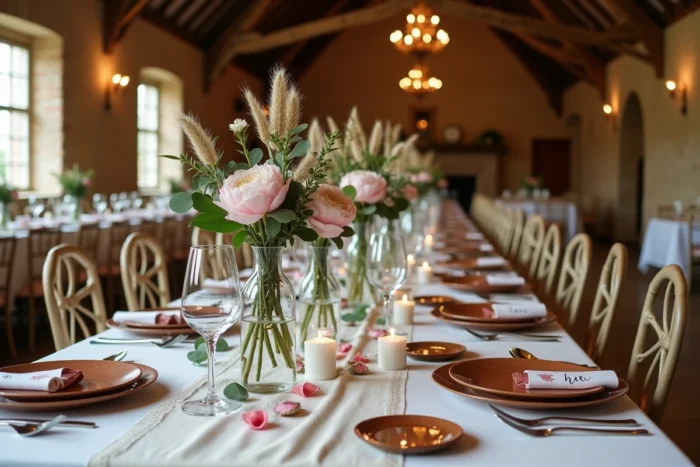
Organic minimalism is gradually replacing decorative overload. Heavy tablecloths, overloaded centerpieces, and arches weighed down with flowers give way to raw materials: washed linen, artisanal ceramics, driftwood, and dried plants mixed with a few seasonal fresh flowers.
This shift is not just aesthetic. It addresses a real budget constraint: concentrating the decoration budget on a few standout pieces (a large suspended floral installation, a green wall at the entrance) creates more impact than uniform decoration spread across all tables.
Material Choices That Structure the Atmosphere
- Crumpled linen as a table runner, paired with matte stoneware, establishes a contemporary rustic feel without falling into the rustic
- Natural wax candles, arranged at varying heights in blown glass holders, effectively replace the LED garlands that are too often used
- Asymmetrical floral arrangements, with grasses and branches, add movement to a long table and avoid the “wall” effect between guests
We observe that couples who choose this direction gain visual clarity. In photos, the result is sharper, and faces stand out better. This is a strong argument when investing in a quality photographer.
Wedding Day Rhythm: Managing Downtime and Guest Energy
The overall rhythm of the day influences the group’s energy. A wedding that starts at 2 PM with a civil ceremony and directly follows with a three-hour cocktail creates an energy dip that is hard to recover at dinner.
Three concrete levers can help maintain intensity:
- Limit the cocktail to a maximum of 90 minutes. Beyond that, guests disperse, conversations become repetitive, and appetite for dinner decreases
- Place a participatory moment (speech, short group game, projection) between the main course and dessert, not before the meal when no one is yet emotionally settled
- Plan for a “second wind” around 11 PM: a radical playlist change, opening an outdoor space with fire pits, or serving a savory snack to reignite the evening
The welcome dinner, organized the night before for close friends and family, also helps ease the main day. Reunions have already taken place, introductions are made. The big day starts with a group that already knows each other.
The Groom’s Suit and Dress Codes: An Often Overlooked Aspect
The groom’s outfit remains the neglected aspect of preparation. The trends for 2025-2026 in ceremonial suits show a return to textured fabrics and deconstructed cuts: blended linen, crumpled wool, unlined jackets worn with slightly tapered trousers.
The classic three-piece suit remains relevant for a formal ceremony, but the lightweight fabric double-breasted jacket, worn without a tie and with an open collar, emerges as a credible alternative for summer weddings. The coherence between the dress code requested from guests and the groom’s own outfit is a detail that structures the overall aesthetic of group photos.
We recommend placing an order at least four months before the date, including alterations. A custom or made-to-measure ceremonial suit requires two to three fittings for a proper fit, especially on the shoulders and sleeve length.
A couple that invests time in transitions, materials, and the tempo of their day creates a fluid wedding, where each guest feels they are experiencing something thoughtfully constructed, without ever perceiving the effort behind it.