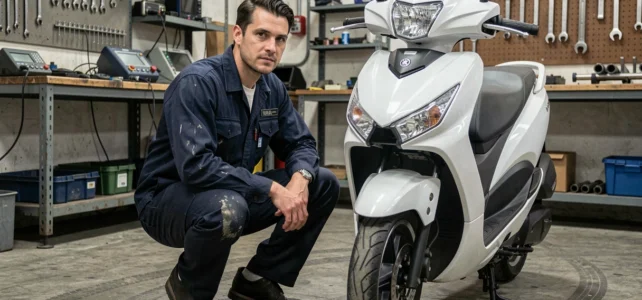
The Xmax 125 often peaks lower than what the manufacturer’s specifications promise. Before ordering a variator kit or adjusting the transmission, we recommend addressing the mechanical efficiency losses that impact top speed more reliably than an original variator.
Efficiency losses on Xmax 125: diagnostics before any preparation
An Xmax 125 that stagnates below 115 km/h on the speedometer does not necessarily need a Malossi variator. In most cases, the problem stems from an accumulation of micro-losses that no one corrects because everyone focuses on the transmission.
Tire pressure is the first factor affecting top speed loss. A rear tire under-inflated by a few tenths of a bar increases the contact surface, rolling resistance, and operating temperature. On a single-cylinder engine of this displacement, every watt wasted in friction directly translates into lost km/h at the top of the rev counter.
The brakes also deserve a check. A caliper that does not retract completely creates a permanent residual friction. We regularly observe brake pads that remain in light contact with the disc, enough to heat up without triggering an alert, but sufficient to reduce the top speed by several km/h.
A detailed article on the speed of the Xmax 125 on Daily Auto lists other recurring mistakes that hinder performance without the rider noticing.
A clogged air filter remains a classic issue. On Euro 5 models, the intake housing is designed to meet strict emission standards. A dirty filter not only reduces power: it leans the mixture and forces the ECU to compensate, further degrading overall efficiency.
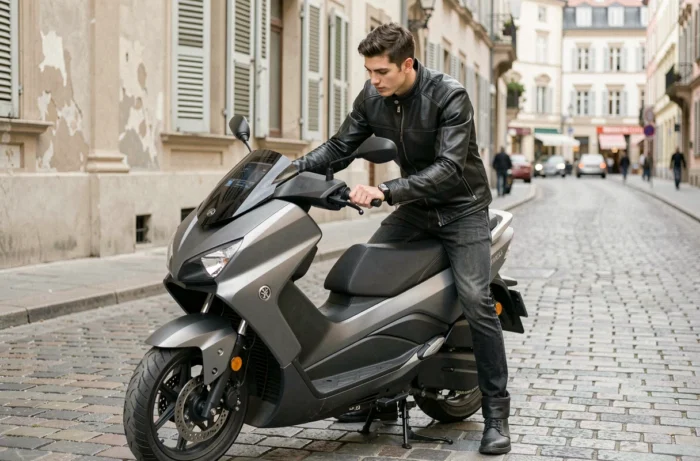
Xmax 125 CVT transmission: rollers, belt, and assembly errors
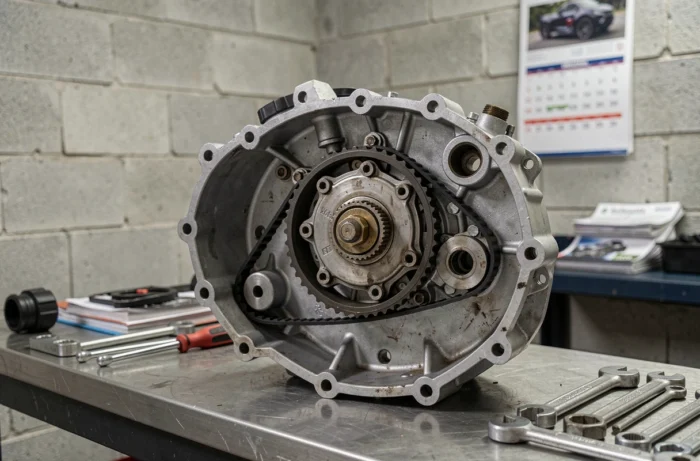
On a 125 scooter, the CVT transmission holds the greatest potential for improvement. The engine remains restricted by Euro 5 regulations and its single-cylinder architecture, but the way power reaches the rear wheel can be significantly enhanced.
Choosing rollers and weight suitable for the rider
The weight of the variator rollers determines the engine speed at which the engine operates at each gear. Rollers that are too heavy keep the engine in a low RPM range where it lacks power. Rollers that are too light make it scream without moving forward.
The forgotten variable remains the rider’s weight. A 90 kg rider and a 65 kg rider do not need the same set of rollers to utilize the same RPM range. The kits sold as standard (such as the Malossi Multivar variator) are calibrated for an average weight and require roller adjustments according to the actual usage profile.
- Original rollers too heavy for a light rider: the engine remains under-revved, acceleration is sluggish beyond 80 km/h.
- Lightened rollers without adjusting the torque spring: the engine revs up but the clamping force on the belt decreases, causing slippage.
- Worn belt combined with a new variator: the stretched belt does not climb properly in the variator cheeks, negating the benefits of the kit.
Belt: the element that is systematically overlooked
An original belt with over 12,000 km no longer transmits power correctly. The rubber vitrifies, the sides wear down, and the belt loses grip in the pulleys. Installing a Malossi variator on a worn belt is like putting slick tires on a race car.
We recommend always pairing a variator change with a new belt (ideally original Yamaha). The marginal cost is low compared to the gain in transmission reliability.
Euro 5 constraints on the Xmax 125: what the standard changes for preparations
The Euro 5 regulation has strengthened the role of electronic diagnostics and anti-pollution systems on 125 cc scooters. This evolution has a direct consequence on preparation strategies: heavy engine modifications have become counterproductive.
Reprogramming the ECU or modifying the exhaust system on a Euro 5 Xmax 125 triggers fault codes. The ECU constantly monitors the lambda sensor, the catalyst, and injection parameters. Any deviation beyond the factory-calibrated thresholds triggers a limp mode, with a software restriction that nullifies mechanical gains.
This is why serious tuners now direct their services towards the transmission (variator, rollers, torque spring, belt) rather than the engine block. The engine of the Xmax 125 remains sealed, but the transmission still offers real optimization margins without conflict with the onboard electronics.
Common mistakes that cause km/h loss on the Xmax 125
Some mistakes appear on forums and in workshops with a regularity that warrants listing them clearly.
- Installing “Xmax compatible” parts without checking the exact generation of the scooter. Between a 2018 Xmax 125 (Euro 4) and a 2021 model (Euro 5), the transmission casings, variators, and springs differ. The model year matters more than the registration year when choosing the right references.
- Neglecting the break-in period after installing a transmission kit. A new variator and new rollers require a few hundred kilometers before reaching their full efficiency. Pushing the engine hard right after leaving the workshop prematurely wears out the parts.
- Chasing top speed without addressing the basic aerodynamics. Rider position, windscreen, top case: every element that increases aerodynamic drag eats away at km/h at the top of the speed range, where air resistance becomes the dominant factor on a 125.
- Comparing speedometer readings between Xmax models. Speedometers overestimate actual speed by several km/h. Only a GPS provides a reliable measurement for comparing two configurations.
The Xmax 125 remains a scooter whose mechanical architecture is designed for urban and suburban reliability. Gaining a few km/h in top speed first requires rigorous maintenance of the transmission and the elimination of parasitic losses, well before purchasing any performance kit.