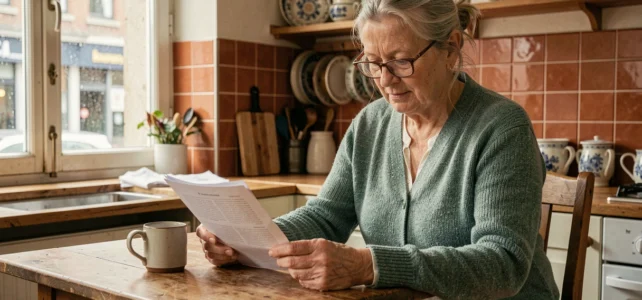
Retirement in Belgium is played out on shifting ground. Between the rising cost of nursing homes, a pension system where the average amount barely covers institutional accommodation, and recent social reforms that change the rights of caregivers, the landscape for Belgian seniors in 2026 looks very different from five years ago. Enjoying retirement in Belgium requires understanding these realities before considering leisure or personal projects.
Pension and the cost of accommodation in nursing homes: the tightening equation
The significant fact of recent years is the growing gap between pension amounts and the actual price of a stay in a nursing home. In Flanders, the average daily rate is around 74 euros per day, or about 2,220 euros per month. In Wallonia, the range is more between 60 and 65 euros per day, which represents 1,800 to 1,950 euros monthly.
These amounts approach, or even exceed, the average pension observed in Belgium (around 1,800 to 1,900 euros). As a result: some retirees can no longer afford institutional accommodation on their own and must seek help from family or turn to the CPAS. The shortage of places, combined with rising operating costs (air conditioning during heat waves, regulatory standards, real estate investments), fuels this tension.
For seniors anticipating a transition to a residence, the question is no longer just “what type of establishment to choose” but “how to finance the difference between my pension and the monthly bill.” The resources available on the Senior Guide: Belgium help identify regional aids and financial support schemes tailored to each situation.
Property ownership: the fourth pillar of Belgian retirement
The Belgian pension system officially relies on three pillars (legal pension, supplementary pension, individual pension savings). In reality, owning one’s home is a decisive fourth pillar for the standard of living in retirement.
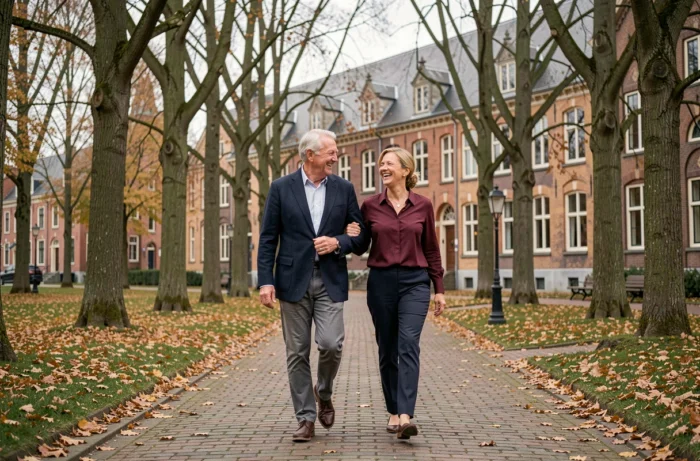
A retired homeowner without a mortgage escapes the heaviest budget item: rent or accommodation charges. This reality partly explains why poverty statistics among seniors differ significantly depending on housing status. Retired tenants are much more exposed to financial precariousness than homeowners, even with equal pensions.
Traditional pension savings, long encouraged by tax advantages, is losing its appeal compared to other investment vehicles like ETFs, according to recent financial analyses. This shift is changing how future Belgian retirees prepare their capital, with an increasing trade-off between real estate, diversified investments, and employer-sponsored supplementary pensions.
Caregiver leave: what the royal decree of July 2026 changes
A royal decree from July 12, 2026, has extended and made more flexible caregiver leave in Belgium. This measure directly affects retirees in two ways: as potential beneficiaries of a relative’s help, and as caregivers themselves (many young retirees assist an elderly parent or a spouse losing autonomy).
The text expands the possibilities for splitting leave and extends its duration. For families trying to delay a parent’s entry into a nursing home, this provision offers additional leeway. Field reports vary on this point: some caregivers feel that the extension of leave remains insufficient given the actual burden, while others see it as a concrete step towards organizing home care.
The rights of caregivers in Belgium remain a complex issue, and the line between family support and caregiver burnout remains blurred in many situations.
Active life span and retirement age postponement: the Belgian debate
Belgium has experienced the highest increase in active life span in Europe in recent years. This catch-up, linked to successive reforms restricting access to early retirement and tightening conditions for early departure, is changing the profile of new retirees.
- The scenario of a pension at 70 years old is now part of the Belgian public debate, although it remains in the realm of projection rather than a confirmed political decision.
- During the Covid crisis, nearly 30,000 long-term sick individuals were put on pension in Belgium, which temporarily altered the structure of retirement entries.
- Since the reform, more unemployed individuals are shifting to health insurance rather than early retirement, pushing back the effective age of leaving the labor market.
These developments mean that today’s retirees often arrive later and sometimes in worse health than they did ten years ago. Home care, local services, and daily assistance are becoming central issues from the early years of retirement, not just in old age.
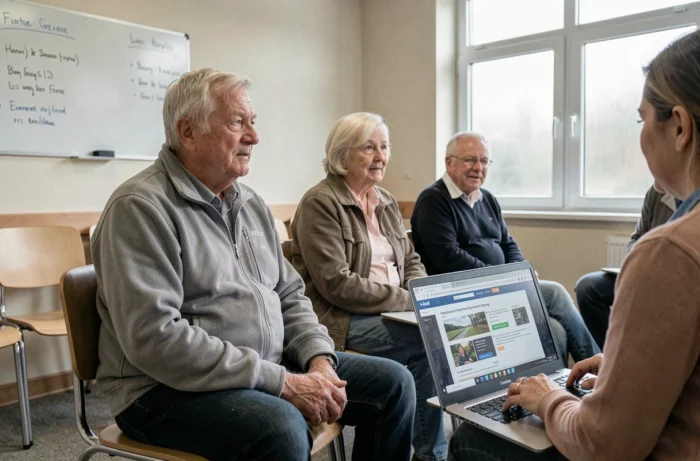
Demographic aging and social spending: the projection for 2070
Social spending related to aging in Belgium is on an upward trajectory that is not expected to stabilize until around 2050. This curve has direct consequences on the services available to seniors: budgetary pressure could limit the development of new home care assistance or places in service residences.
For current and future retirees, this means not relying solely on public provisions. The interplay between regional aids (Brussels, Wallonia, and Flanders each have their own rules), legal pension, and personal resources determines the actual quality of life in retirement.
In Belgium, enjoying retirement remains possible, but the margin is shrinking for those who have not anticipated the gap between pension and cost of living. The current trend in aging expenses and accommodation prices does not suggest any short-term improvement. Identifying the expenses that the legal pension will not cover remains the first step towards realistic financial preparation.