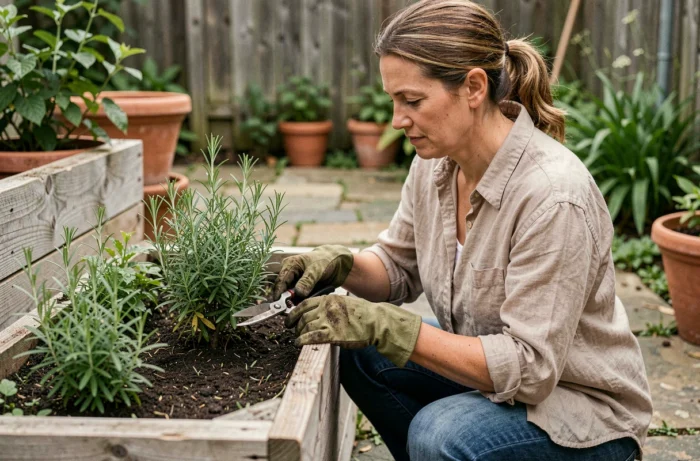
A garden that endures through the four seasons without exhausting itself relies on a principle often overlooked: adapting each action to the soil and local climate rather than following a generic calendar. The nature of the land, exposure, and water restrictions in your municipality influence both the success of a flowerbed and the choice of plants themselves. Maintaining and designing a garden year-round requires less effort than one might think, provided that the right habits are established from the start.
Local water restrictions and garden watering: what really changes
The regulations on water use in gardens are no longer uniform at the national level. Prefectural orders now define restrictions by watershed, sometimes on a municipality-by-municipality basis, with frequent updates during drought periods.
Before watering, the platform VigiEau allows you to check the restrictions applicable to your address. A simple postal code is enough to find out if watering is allowed, limited to certain hours, or prohibited.
One point deserves attention: water drawn from a private well is not automatically exempt. When it comes from an underground aquifer, its extraction may be subject to the same limitations as water from the public network. Only certain reserves of rainwater that are stored and disconnected from the natural environment may sometimes fall under a different regime, depending on the applicable order.
On this topic, as well as other practical aspects of gardening, Jardiniers info’s practical articles detail watering techniques suitable for each context.
The most effective watering targets the base of the plants, early in the morning or in the evening, to limit evaporation. A thick layer of mulch around flowerbeds and in the vegetable garden significantly reduces the need for water, sometimes enough to space out waterings by several days even in summer.
Soil maintenance: mulching and alternatives to traditional lawns
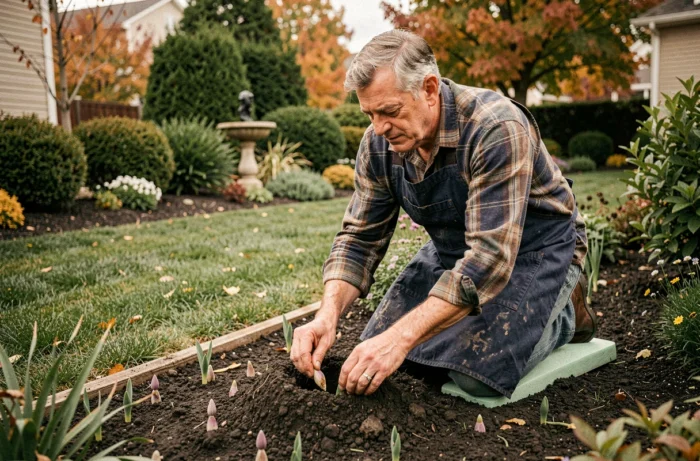
The soil is the foundation of any sustainable garden. Bare soil dries out quickly, compacts under rain, and encourages the emergence of weeds. Systematic mulching (bark, chippings, straw, dead leaves) protects the earth, nourishes microbial life, and limits manual weeding.
Thickness matters: a layer that is too thin decomposes in a few weeks without providing real protective effects. Aim for a thickness dense enough that the soil remains invisible once the mulch is applied.
Rethinking the place of the lawn
Recent recommendations in ecological gardening question the flat and uniform lawn. Less frequent mowing and a higher cutting height preserve wildflowers, pollinators, and soil moisture. Intentionally leaving an area of fallow in a corner of the garden is not neglect; it is a management choice that promotes biodiversity.
A healthy garden does not mean a uniformly mowed garden. Alternating short-mown areas (near the terrace, along pathways) with taller areas creates an interesting visual contrast while reducing the time spent mowing.
Pruning and caring for plants according to the seasons
The pruning of plants serves a specific purpose: to stimulate flowering, contain growth, or remove dead wood. Pruning at the wrong time can compromise the following year’s flowering or weaken a shrub against frost.
- Spring-flowering shrubs (forsythia, lilac, spiraea) should be pruned just after flowering, never in autumn or late winter.
- Roses and summer-flowering shrubs are pruned after winter, before the vegetative restart.
- Evergreen hedges are pruned twice a year: once in spring and again at the end of summer to maintain a neat shape before winter.
For fruit trees, formative pruning is done in winter (when not frozen), while green pruning (removal of suckers) occurs in summer. A clean and sharp cutting tool limits the risk of disease on pruning wounds.
Designing a functional garden: circulation and material choices
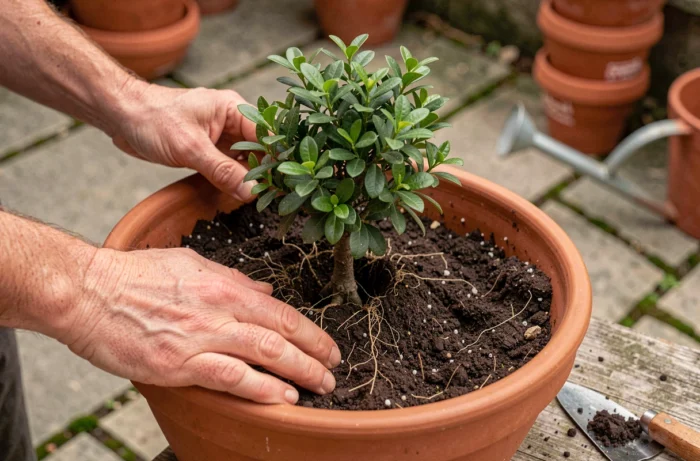
Designing a garden is not limited to plants. The circulation between different areas (vegetable garden, terrace, flowerbeds) determines daily comfort and the overall appearance of the space.
Paths and surfaces
Main paths, used daily, benefit from being stabilized with a durable material (compacted gravel, slabs, stepping stones). Secondary paths can remain more natural, with simple mineral mulch or wood chips.
The choice of materials has a direct impact on future maintenance. A free gravel path requires regular weeding. A path made of slabs laid on a sand bed needs occasional brushing to limit moss growth.
Ecodesign and garden materials
Landscape ecodesign recommends evaluating not only the plants but also the materials used for borders, walls, and surfaces. Prioritizing local, permeable, and durable materials reduces the garden’s ecological footprint and facilitates rainwater management.
- Permeable surfaces (gravel, slabs with grass joints) allow rainwater to infiltrate directly into the soil.
- Untreated wood or local stone borders integrate better into the landscape than plastic or smooth concrete borders.
- A dry stone wall provides a natural habitat for insects and lizards, in addition to structuring the space.
A well-designed garden requires less maintenance than a poorly thought-out garden. The time invested in planning paths, choosing plants suited to the soil, and installing durable mulch pays off each week in hours of work avoided.
The last constraint to keep in mind remains local: your soil, your exposure, and the regulations in effect in your municipality weigh more than any generic guide. A check on VigiEau at the beginning of each summer and regular observation of your land remain the two most cost-effective actions for a healthy garden year-round.