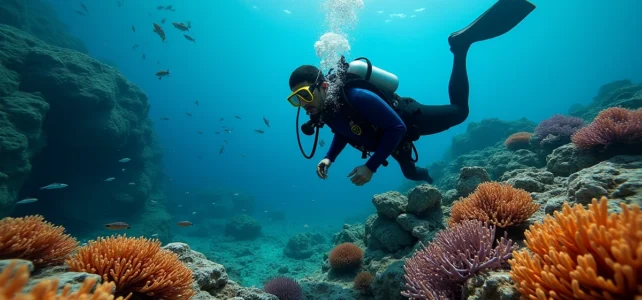
Putting your head underwater a few meters from a Corsican beach reveals a landscape as rugged as the mountains visible from the coast. Rocky cliffs, posidonia meadows, granite blocks inhabited by sea urchins and starfish: the coastline of Haute-Corse concentrates a diversity of seabeds accessible to both guided divers and snorkeling enthusiasts. However, you need to know where to go, and especially what precautions to take depending on the area.
Currents and jellyfish: what spot lists don’t specify
Most articles about snorkeling in Corsica list beach names without mentioning local constraints. Two recent phenomena deserve your attention before choosing a site in the northern part of the island.
The first concerns the northern tip of Cap Corse, between Barcaggio and the island of Giraglia. The narrow passage between the coast and the island creates strong marine currents. In established winds, snorkeling there becomes drifting: returning to the shore requires an effort that beginners often underestimate. A snorkeling outing in this area should be prepared by checking the marine weather of the day and the wind direction.
The second phenomenon is more recent. The marine heatwaves observed in the northwestern Mediterranean in recent years have led to an increase in jellyfish presence during the summer. The coastline of Haute-Corse is not spared. Planning to wear a thin wetsuit or a lycra, even when the water temperature makes you want to skip it, significantly reduces the risk of stings.
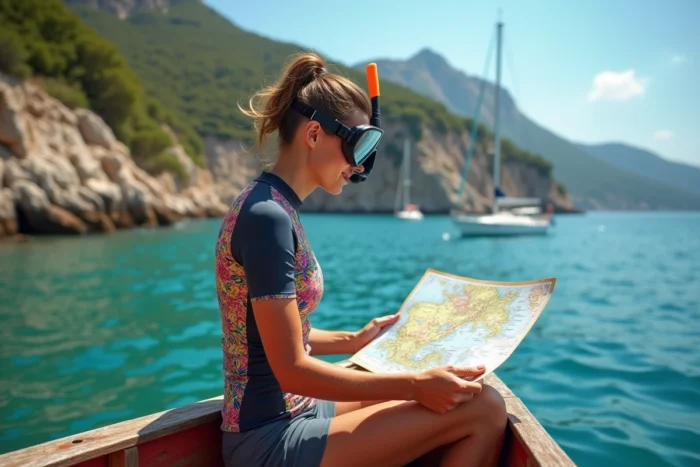
To identify areas suitable for your level and pinpoint these current zones, a map of diving and snorkeling sites in Northern Corsica allows you to visualize the spots along the coast before heading out.
Diving in Calvi: the wreck of the B-17 and the Revellata canyon
Calvi is not just a citadel and a turquoise bay. The area is home to two dive sites that alone justify a detour.
The B-17, a World War II wreck
Located between twenty-five and twenty-seven meters deep, this American four-engine bomber made an emergency landing during the aerial battles that affected this part of the Mediterranean. The fuselage measures nearly thirty meters in wingspan. Both wings are intact, all four engines are still in place, and the open cockpit reveals the two original pilot seats.
Only one propeller remains, the other three having been removed over the years by unscrupulous divers. The B-17 is accessible from level II, with a difficulty considered easy despite the depth.
The underwater canyon of Revellata
A few minutes by boat from Calvi, the tip of Revellata plunges into an underwater canyon. The drop-offs are spectacular. This site is suitable for experienced divers looking for vertical relief and fauna attached to the rocks (gorgonians, sponges).
Snorkeling in Haute-Corse: three areas to distinguish
You may have noticed that guides often mix the north and south of the island in the same list? However, snorkeling conditions vary by area. Here are three zones in the north with their specific features.
- The marine reserve of Calvi offers clear waters and shallow rocky bottoms, ideal for observing bream, wrasse, and sea urchins without straying far from the shore.
- The Gulf of Saint-Florent, on the Agriates side, provides access to secluded beaches (Saleccia, Lotu) where posidonia meadows shelter juvenile fish. The water is clear, with a sandy bottom and rocky outcrops.
- The eastern Cap Corse, less frequented, offers coves accessible on foot with submerged rocks inhabited by a diverse fauna. The east wind can create short swells: prefer calm mornings.
Each area has its character. In Calvi, entry is easy from the beach. On the Agriates side, a boat or a long path is required. In Cap Corse, the coastal road limits access but filters the crowds.
Visibility, posidonia, and season: when to dive in northern Corsica
Underwater visibility in Corsica is often described as exceptional. This is true, but it varies by season and site. In Haute-Corse, it ranges between twenty and thirty meters in good conditions, mainly from May to October.
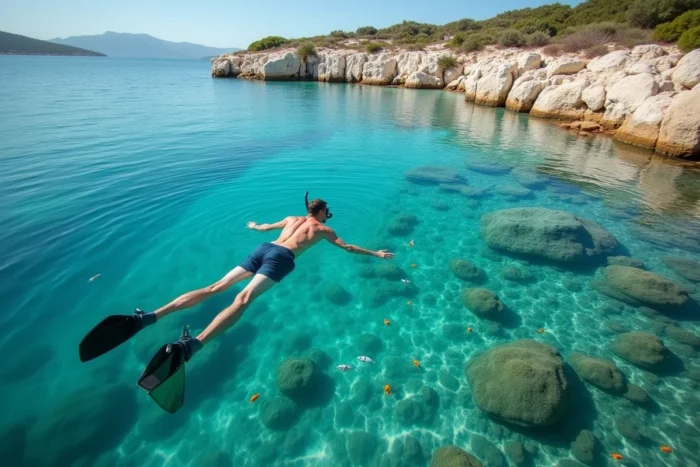
The posidonia meadow plays a central role in the quality of this visibility. This marine plant (it is not an algae) filters the water, stabilizes the sandy bottom, and serves as a nursery for dozens of fish species. Swimming above a posidonia meadow without stepping on it is the basic rule of responsible snorkeling in the Mediterranean.
Why avoid July-August if you can? The beach crowds compress the entry zones. Rental boats stir up sand and disturb visibility in narrow coves. June and September offer already warm water, low-angle light that penetrates better beneath the surface, and almost deserted spots during the week.
Equipment and guidance for a first immersion
No need for expensive equipment to start snorkeling. A well-fitting mask (that doesn’t let water in when you inhale through your nose), a snorkel with a purge valve, and short fins are sufficient. Add a lycra or a two-millimeter wetsuit for thermal protection and against jellyfish.
For scuba diving, clubs in Calvi, Bastia, and Saint-Florent offer guided introductory dives. Recently, French regulations require affiliated clubs to adhere to enhanced safety protocols. Inquire directly with the club about the guidance conditions and the instructor/diver ratio before booking.
- Mask: try it dry, inhale through your nose. If it stays on without a strap, the size is good.
- Fins: short and flexible for snorkeling, longer and stiffer for diving.
- Sun protection: mineral sunscreen (without harmful chemical filters for corals and posidonia) applied before putting on the wetsuit.
The north of Corsica combines preserved seabeds, relatively easy access from Bastia or Calvi, and diving conditions suitable for all levels. Preparing your outing based on the wind and season remains the best way to fully enjoy it, whether with a simple mask or a tank on your back.