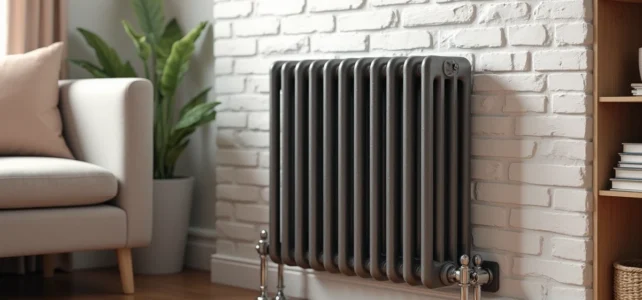
A cast iron radiator with twenty columns placed against a drywall partition is the kind of situation that ends badly. The weight of a cast iron heating body far exceeds that of a comparable steel or aluminum model, and this constraint conditions everything else: the choice of wall support, the type of fastening, and sometimes even the reinforcement of the floor.
Before discussing price or design, this is where one starts when wanting to install a cast iron electric radiator without any unpleasant surprises.
Weight and fastening of a cast iron radiator: the constraint that no one details
A cast iron inertia electric radiator weighs significantly more than a radiant panel or a conventional convector. On a load-bearing wall made of concrete blocks or solid bricks, fastening is not a particular problem with suitable anchors for the load.
The difficulty arises with lightweight partitions. A standard plasterboard on a metal frame cannot support a concentrated load of several dozen kilograms without reinforcement. One must then plan for specific expansion anchors, or even install wooden crosspieces between the studs of the frame to distribute the weight.
In the renovation of an old apartment with a wooden floor, the condition of the joists is also checked. A cast iron radiator installed on a weakened floor can cause localized sagging. Feedback varies on this point depending on the condition of the structure, but a prior diagnosis remains the only reliable approach.
To delve deeper into the subject of the overall budget (purchase, installation, consumption), Bâtir Architecte’s advice details often underestimated expense items.
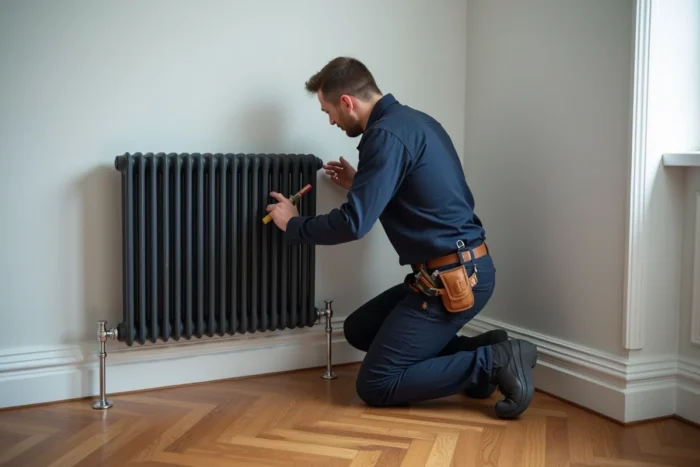
Prices of electric cast iron radiators: what affects the bill
Wide price ranges for cast iron inertia radiators are often reported. The price depends on three concrete variables: the power of the device, the quality of the built-in regulation, and the brand.
Power and room sizing
An undersized radiator will run continuously at full load without reaching the set temperature. An oversized model will cost more to purchase without any real comfort gain. Sizing is calculated based on the volume of the room and its insulation, not just the floor area.
For a recent home built to current standards, the power needed per square meter is significantly lower than that of a poorly insulated house from the 1970s. Before buying, one measures, identifies thermal bridges, and adapts.
Built-in regulation and programming
A basic thermostat modestly increases the entry-level price. A regulation system with open window detection, weekly programming, and remote control significantly raises the bill but generates energy savings over time.
- Mechanical thermostat: manual adjustment, larger temperature variation around the set point, lowest purchase price
- Electronic thermostat with programming: precise temperature maintenance, programmable time slots, good cost/comfort compromise
- Connected control (6-order pilot wire or Wi-Fi): automatic adjustment based on presence and habits, higher initial investment but better-controlled consumption
New cast iron or refurbished cast iron radiator: a choice to make
In recent years, the refurbishment of cast iron radiators has gained ground. The idea is to recover an old hot water cast iron radiator, sand it, repaint it, restore the valves, and then equip it with an electric resistance and a thermostat. The result is a cast iron inertia electric radiator at a lower cost, with a lower carbon footprint than a new purchase.
A refurbished cast iron radiator retains the thermal inertia qualities of the original model. Cast iron accumulates heat and releases it gradually, even after the resistance is turned off. It is this property that distinguishes cast iron from aluminum or steel: the temperature rise is slower, but the release lasts longer.
The refurbished option also has its limits. The sealing of the old elements must be checked, and the seals replaced. A deeply corroded radiator is not worth restoring. And compatibility with a modern regulation system is not always guaranteed without adaptation.
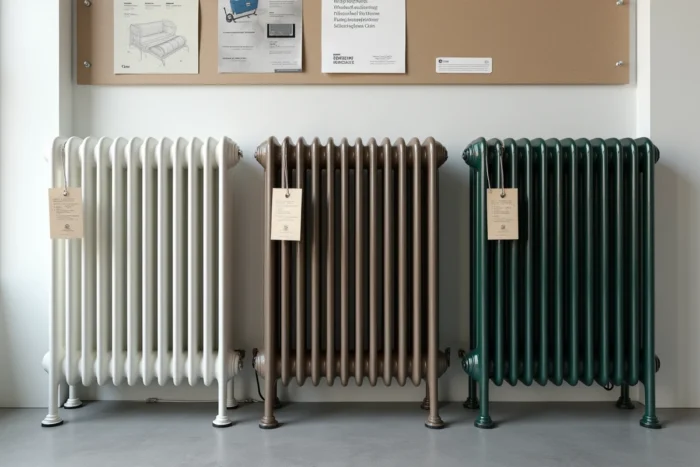
Electrical installation and standards to comply with for a cast iron radiator
Connecting a cast iron electric radiator is not just about fixing it to the wall and plugging it in. The NF C 15-100 standard requires a dedicated circuit for each heating device, protected by a circuit breaker suitable for the radiator’s power.
- Each radiator must be connected to a wall cable outlet, not to a standard socket with a plug
- The pilot wire, when it exists, allows centralizing the programming via an energy manager or a remote thermostat
- In renovations, it is often necessary to run a dedicated line from the electrical panel, which adds a significant labor cost
- The distance between the radiator and a water point (bathroom) must comply with the safety volumes defined by the standard
Hiring a qualified electrician ensures compliance with the installation. An improper connection can lead to a denial of insurance in case of a claim.
Soft heat and cast iron inertia: what to expect on a daily basis
Cast iron primarily radiates heat. One feels an enveloping warmth, comparable to that of a wall heated by the sun, rather than the sensation of hot air blown from a convector. This radiation diffusion also limits dust circulation, a concrete advantage for allergy sufferers.
In return, the temperature rise of a cast iron radiator takes longer than that of a radiant panel or a convector. In a secondary residence or a room used occasionally, this delay can be problematic. Anticipated programming (starting the heating an hour before occupancy) compensates for this heating time.
For a living space occupied continuously, the inertia of cast iron becomes an asset: the radiator smooths out temperature variations and maintains stable comfort without frequent on/off cycles. Energy consumption remains comparable to that of other electric radiators of similar power, with the difference primarily playing out in perceived comfort and the regulation used.