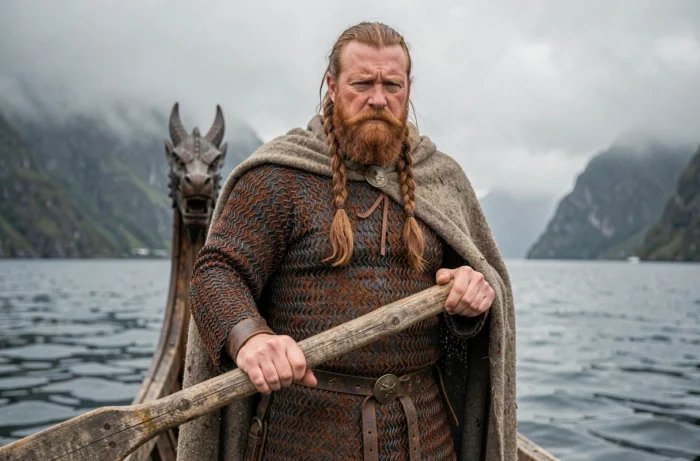
Björn Ironside is one of the names most often mentioned when people talk about Vikings. The TV series made him familiar to millions of viewers, but the historical figure is far more elusive than his fictional counterpart. Contemporary sources on Viking raids do not even credit him with the exploits attributed to him today. The real subject is the gap between later accounts and chronicles written at the time.
Contemporary chronicles and later accounts: two versions of Björn
Reading texts written at the time of the events brings a surprise. Frankish annals describe raids carried out by “Danish pirates” without ever naming Björn as their leader. Arabic accounts, meanwhile, refer to Majūs, a generic term for Nordic invaders.
The association of Björn with the Mediterranean expedition of 859–862 appears much later, notably in the work of William of Jumièges, around 1070—two centuries after the events. This time gap changes everything: this is no longer eyewitness testimony, but a narrative reconstruction. To explore Björn Ironside: myth and historical reality in greater depth, this shift from chronicles to legends deserves a closer look.
The Annals of Saint-Bertin mention a certain Berno, active on the Seine from 855, who swore allegiance to Charles the Bald in 858. Some historians have suggested that this Berno was Björn Ironside. This identification remains a hypothesis, not an established fact. The names are similar and the geographical area matches, but there is no evidence that settles the question.
Viking raids in the Mediterranean: what is documented and what is not
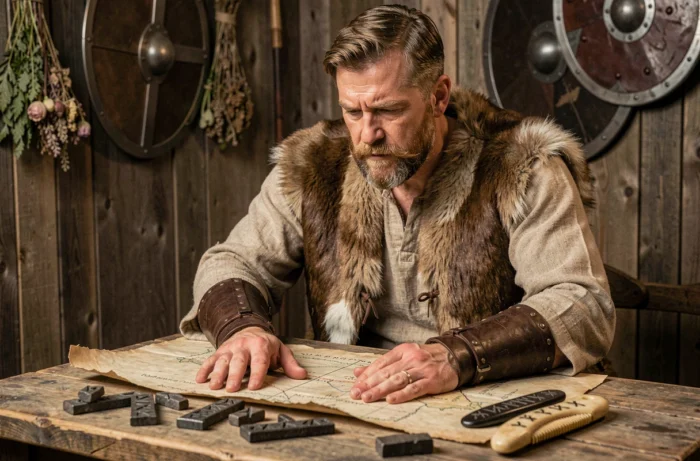
The Viking expedition to the Mediterranean between 859 and 862 did take place. Multiple sources report attacks in southern Spain and other parts of the Mediterranean basin. This military campaign is documented.
The most famous episode, however, is problematic. According to tradition, the Vikings supposedly mistook the Italian city of Luna for Rome and captured it by trickery, with their leader pretending to be dead in order to enter the city. This dramatic story belongs to a later tradition and is not firmly established by contemporary chronicles.
Why does this distinction matter? Because it illustrates a common pattern in medieval historiography: real expeditions provide the basis for embellished stories, intended to glorify a lineage or entertain an audience. Eleventh-century Norman chroniclers had every reason to magnify the exploits of their Scandinavian ancestors.
What the sources allow us to say
- Viking fleets raided the Mediterranean between 859 and 862, reaching the southern Iberian Peninsula and other coastal areas
- Frankish annals document the activity of Viking leaders on the Seine in the 850s, including one named Berno
- The attribution of these operations to Björn Ironside rests on Norman texts written around two centuries later
Björn, son of Ragnar: a lineage shaped by the sagas
The series Vikings portrays Björn as the eldest son of Ragnar Lothbrok. This lineage comes from Scandinavian sagas, notably the Saga of Ragnar Lodbrok and the Tale of Ragnar’s Sons. These texts were written several centuries after the events they describe.
Ragnar Lothbrok himself is a figure whose historicity is debated. Several distinct Viking leaders may have been merged into a single character over the course of these accounts. Björn’s descent from Ragnar is therefore not based on contemporary documents, but on a Scandinavian literary tradition that blends collective memory and fiction.
The title of Swedish king attributed to Björn in some sources belongs to the same tradition. These accounts were recorded in works written long after the events. They cannot confirm his reign with the same certainty as the raids described in Frankish annals or Arabic sources.
The Munsö burial mound
On the island of Munsö, in Lake Mälaren in Sweden, a burial mound is traditionally presented as Björn Ironside’s tomb. This attribution has not been confirmed by archaeology. The site exists and the burial mound is real, but there is no proof that it contains the remains of the historical figure.
The nickname Ironside: origin and meaning of the Viking name
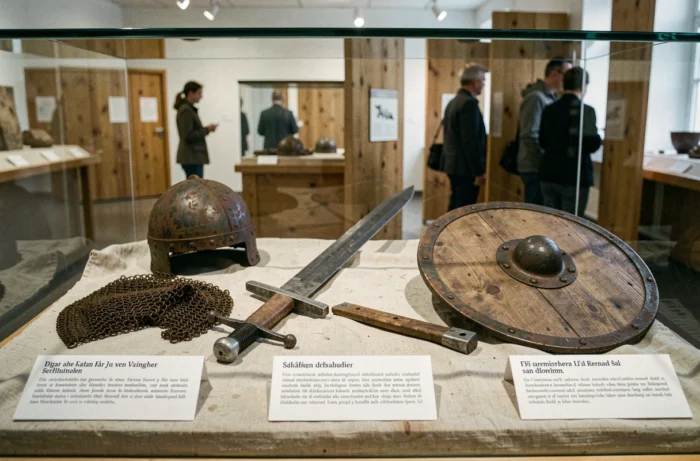
The nickname Ironside (Côtes-de-Fer in French, or Járnsíða in Old Norse) appears in the sagas. Its interpretation varies from one source to another. Some accounts mention an especially strong shield, others suggest that Björn fought in reinforced armor, while still others see it as a metaphor for his toughness in battle.
No contemporary source on the raids mentions this nickname. Like the rest of his heroic biography, it belongs to the narrative layer added by the sagas and later chronicles.
This point sums up the case quite well: the Björn Ironside we know is a composite figure. A factual foundation—documented Viking raids in the Mediterranean and along the Seine in the ninth century—was overlaid with literary accounts that gave collective events a name, a lineage, and heroic exploits. Björn is less a rediscovered individual than a character built, layer by layer, over centuries of oral and written tradition.